 Alice Blue
| Regulation | SEBI-regulated domestic discount broker |
|---|---|
| Local licence | SEBI stock broker INZ000156038 |
| Availability | Alice Blue Financial Services (P) Ltd |
| Max leverage | Intraday MIS with margin/exposure |
| Costs | Delivery Rs.20/order or 2.5% (lower) |
| Platforms | ANT (Analysis and Trade) mobile app, web, desktop |
| Minimum deposit | $100 |
| Regulator | FCA, CySEC |
What you can access
- Forex / CFDs
- Local stocks
- US stocks
- Crypto
- Commodities
Most retail investors end a year of CFD trading with a loss.
What Alice Blue Actually Is
Alice Blue is a SEBI-regulated domestic discount broker built on a flat-fee model, and for Indian traders it sits in a specific lane: it is not an international forex or CFD venue, and it does not pretend to be. It is a Bengaluru-based firm that gives you a Demat plus trading account, access to NSE, BSE and MSE, and a brokerage structure that undercuts full-service houses by a wide margin.
Founded in 2006 by Sidhavelayutham Mohanamoorthy, the firm is a bootstrapped discount broker that has operated through two decades of Indian market cycles.
The core registration is plain to verify. Alice Blue Financial Services (P) Ltd holds SEBI stock broker registration INZ000156038, is a member of NSE, BSE and MCX (MSE), and carries CDSL DP ID 12085300.
Costs Compared With the Market
The pricing is where Alice Blue either wins you or loses you in the first five minutes. Most full-service Indian brokers charge between 0.20% and 0.50% per executed order. Alice Blue's structure is flat per order, with a percentage cap when the order is large enough that flat would overcharge you.
| Segment | Alice Blue charge | Typical full-service broker |
|---|---|---|
| Delivery | Rs.20/order or 2.5%, lower | 0.20-0.50% of turnover |
| Intraday | Rs.20/order or 0.05%, lower | 0.02-0.05% (still per order) |
| AMC | Zero (since 12 Sep 2024) | Rs.300-750 per year |
| Account opening | Free, first year free | Rs.200-500 |
On a Rs.1,00,000 delivery buy, a 0.30% full-service broker takes Rs.300. Alice Blue takes Rs.20. On low-value orders the flat fee is the entire story; on very large orders the 2.5% ceiling rarely triggers.
A flat Rs.20 per order punishes small quantities. If you routinely trade Rs.2,000-3,000 positions, Rs.20 in and Rs.20 out is 1.3% of your notional, and that dwarfs anything the spread on the underlying gives you.
The Platform Question
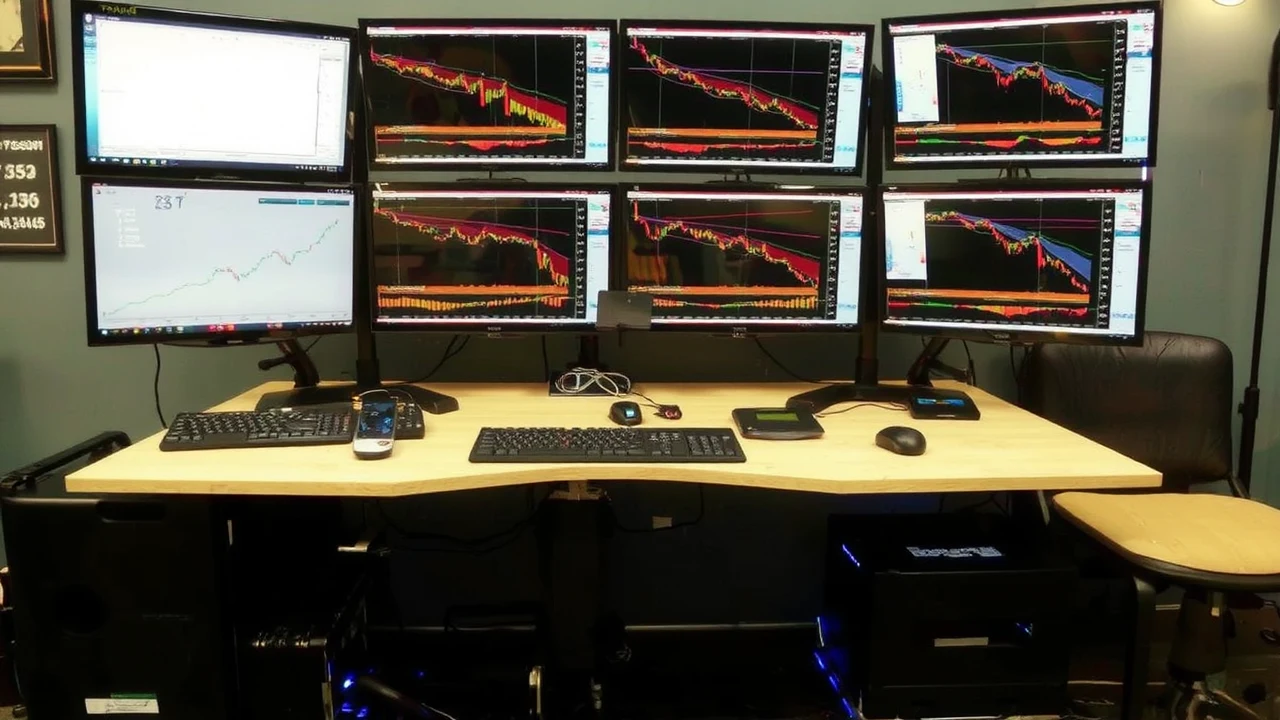
Alice Blue runs its own stack rather than licensing MetaTrader. The main product is ANT, short for Analysis and Trade, available on mobile, web and desktop, with ANT MOBI serving as the lighter mobile companion. Most domestic discount brokers build proprietary terminals, and the industry standard is a charting package bolted onto a functional order pad.
A proprietary platform gives you tighter integration with Indian instruments, IPO applications and mutual fund ordering in one place. It also means no third-party indicators, no MQL-style automation culture, and a smaller pool of user-generated tutorials when something breaks. If you have spent years inside MT4 or MT5, the migration will cost you a few weeks of muscle memory.
Instruments cover equity, F&O, currency, commodity, mutual funds and IPO applications. That is a full domestic spread, with no spot forex pairs outside the INR-based exchange segment and no international index CFDs.
The Regulatory Frame in India
Alice Blue is regulated by SEBI. What its licence does not cover is the offshore forex and CFD channel, because no Indian entity is permitted to offer that to residents in the first place.
RBI and FEMA allow Indian residents to trade only INR-based currency pairs, such as USD/INR, EUR/INR, GBP/INR and JPY/INR, plus permitted cross-currency derivatives on SEBI-recognised exchanges. The RBI Master Direction on Electronic Trading Platforms prohibits operating a forex ETP in India without RBI authorisation, and remitting funds abroad for margin forex trading is not a permitted LRS purpose. That boundary applies to every SEBI broker equally, not to Alice Blue alone.
The RBI Alert List is worth checking before funding any broker. As of the 19 November 2025 update it totalled 95 entities, with Starnet FX, CapPlace, Mirrox, Fusion Markets, Trive, NXG Markets and Nord FX added in that revision. The RBI states the list is not exhaustive, so absence from it is not a clean bill of health.
What the Leverage Numbers Mean
There is no single fixed retail leverage cap in India the way ESMA sets 1:30 in Europe. Exchange-traded INR currency derivatives are margin-based, with SEBI and exchange SPAN plus exposure margins landing roughly in the 3-5% range, which works out to about 20-30x on notional. Alice Blue's intraday MIS with margin and exposure follows the same rules, and MTF is offered on the equity side.
At 25x, a 4% adverse move against your position consumes the entire margin. Indian markets can produce that inside a single session around budget announcements, monetary policy or global risk events.
Funding, Withdrawals and Local Rails
Deposits move through UPI, net banking, IMPS, NEFT and RTGS. UPI via PhonePe or Google Pay lands near-instantly, 24/7, within the NPCI limit of roughly Rs.1 lakh per transaction per day. IMPS settles in minutes. Larger amounts go through NEFT or RTGS from HDFC, SBI or any other bank.
There is no fixed minimum to open or fund. The base and settlement currency is INR throughout, which means no conversion cost, no FX spread and no exposure to currency movement on your own cash.
Domestic equity settlement follows the exchange cycle, so withdrawal speed depends on when your funds are actually settled rather than on the broker being slow. Keep a buffer for T+1 settlement plus bank processing before you need the money elsewhere.
Where Alice Blue Falls Short
The absence of an Islamic or swap-free account is a straight no for traders who need one. Swap-free accounts are a niche but real demand in India, and a meaningful share of brokers covered in our data do offer them. Alice Blue does not, and no workaround exists on the domestic exchange-traded side.
Small-ticket traders get squeezed by the flat fee, as covered above. There is also the question of platform maturity: app-store reviews flag chart settings and execution behaviour in isolated cases, and while no major SEBI action against the firm was verified at the time of this review, those complaints are consistent enough to be worth testing yourself.
Access is domestic-only by design. If your strategy requires spot forex, international indices or commodities outside the Indian exchanges, no amount of good pricing here solves that.
What to Look For Elsewhere
If your needs run beyond Indian exchange-traded instruments, the question stops being about Alice Blue and becomes about how to judge any international provider.
The benchmark criteria are not exotic. Look for regulation at the tier of FCA, CySEC or ASIC rather than a self-issued offshore registration. Check that client funds are segregated and that the broker publishes which bank holds them. Compare total cost of ownership: spread plus commission plus any inactivity or withdrawal fee, not just the headline number. Look at how long the entity has actually operated under the same licence. Test the live chat before you deposit, and see whether you get a person who understands margin or a script.
Does It Justify the Effort
The answer depends on what you are trying to do, and the effort involved in switching is real: new platform, new KYC, new muscle memory, a few weeks of reduced efficiency.
Reasonable if you trade Indian equities, F&O, currency derivatives or commodities in meaningful order sizes, and you want the flat Rs.20 structure plus zero AMC to compound over a year. A trader doing 40 orders a month saves roughly Rs.9,000 annually against a 0.30% full-service broker at Rs.1,00,000 average order value. Add the free first year and the account pays for itself before you have learned the chart shortcuts.
Unreasonable if your strategy leans on global instruments, if you need a swap-free account, if your average order is small enough that Rs.20 dominates your cost, or if you want a platform ecosystem with third-party tooling and a large user community behind it. In those cases the more sensible path is a provider regulated at FCA, CySEC or ASIC level, where segregation of client funds is standard, costs are published line by line, and the operating history is long enough to inspect.
| Feature | Alice Blue | FxPro |
|---|---|---|
| Regulation | SEBI-regulated domestic discount broker | Unregulated locally |
| Local licence | SEBI stock broker INZ000156038 | No local Indian licence |
| Max leverage | Intraday MIS with margin/exposure | Up to 1:200 |
Alice Blue is regulated by SEBI and CDSL DP, but that is not the same tier as FCA/CySEC/ASIC/SCA-style oversight, which typically adds stronger ring-fencing of client money, clearer compensation backstops, and tighter external enforcement. Practically, that means a trader gives up the higher-grade client-fund segregation certainty, statutory compensation protection, and the stronger loss-recovery framework that a fully top-tier regulated broker offers if the broker fails or misuses funds.
Pros and cons


Questions
Can Indian residents legally open an account with Alice Blue?
Yes. Alice Blue Financial Services (P) Ltd is a SEBI-registered stock broker, INZ000156038, and a member of NSE, BSE and MCX (MSE) with CDSL DP ID 12085300. Opening a Demat and trading account is fully within the domestic legal framework, subject to standard KYC.
What documents do I need, and how long does approval take?
You need a PAN card, which is mandatory, plus Aadhaar, an address proof such as Aadhaar, a utility bill or a bank statement typically within the last three months, and bank proof like a cancelled cheque. Approval usually completes within 24 to 48 hours.
Is Alice Blue a forex or CFD broker?
No. It gives access to exchange-traded currency derivatives on SEBI-recognised exchanges, which for residents means INR-based pairs such as USD/INR, EUR/INR, GBP/INR and JPY/INR plus permitted cross-currency contracts. Spot forex and offshore CFDs fall outside the permitted domestic framework entirely.
Can I fund the account from an overseas bank account?
The account operates in INR and settles in INR through UPI, net banking, IMPS, NEFT and RTGS. Note that margin or leveraged forex trading is not a permitted LRS end-use, so an overseas remittance cannot legally be used to fund that kind of activity regardless of which broker you approach.
How is profit from trading taxed?
Exchange-traded currency futures and options profit is generally treated as non-speculative business income and taxed at your slab rate. Intraday speculative positions are taxed as speculative business income, with losses set off only against speculative income and carried forward for four years, versus eight years for non-speculative losses. Residents must also declare worldwide income and foreign assets under Schedule FA. Verify current rules with the Income Tax Department or a tax professional.